 Pet Project Club
Budva / Montenegro
Telegram
Pet Project Club
Budva / Montenegro
Telegram
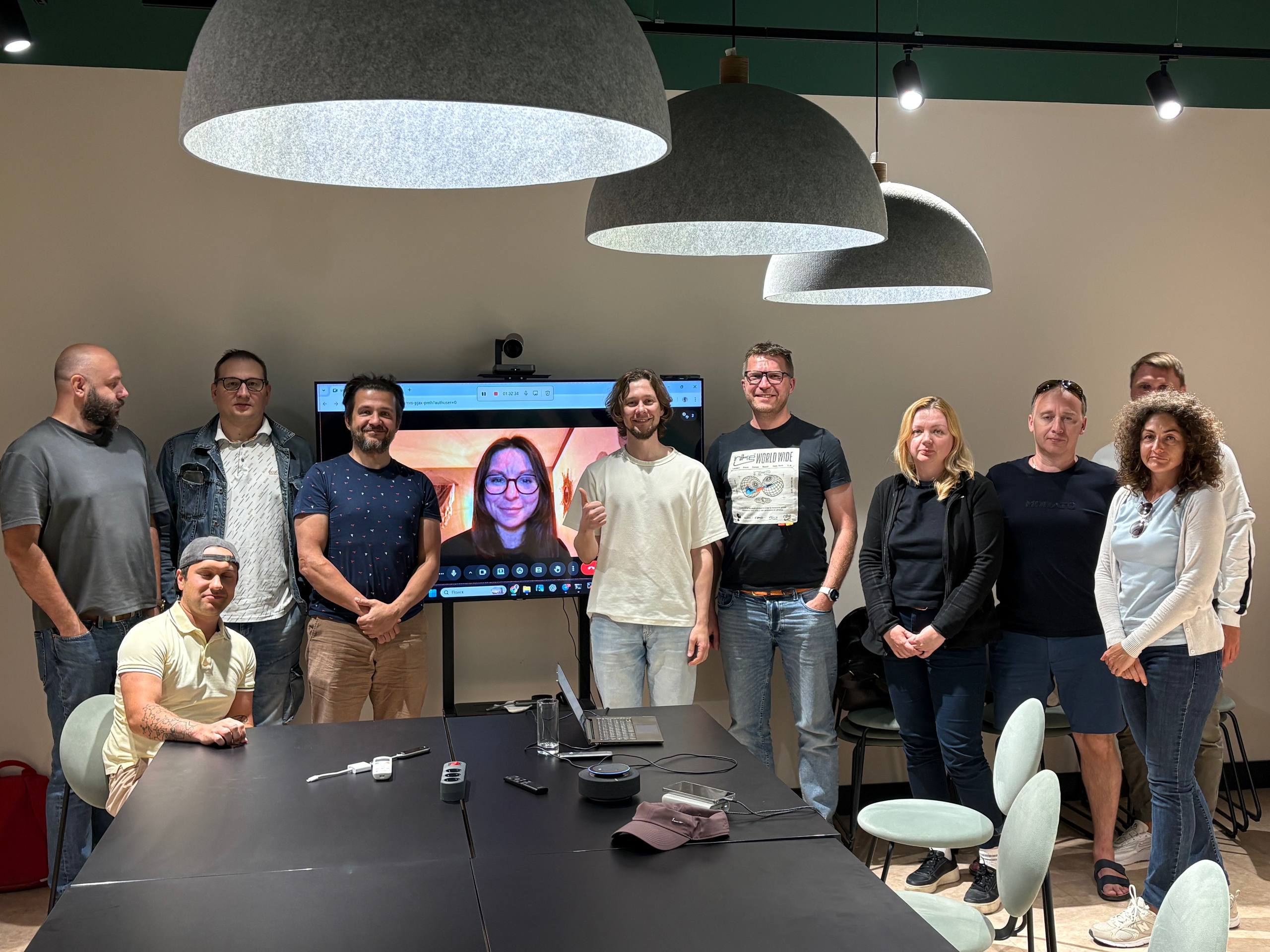
The meeting was very eventful. We met Dasha @angrysushi, a marketing expert, and discussed how to bring products to market even with a limited budget. I remembered the following points (mostly about mobile apps):
- ASO (App Store Optimization) — it's not just or mainly about keywords. One of the main insights: you should treat the app icon not just as a picture but as a full-fledged creative. It is important to understand how it looks in the search results and how users click on it, because behavioral factors (installs) ultimately affect relevance and rankings in the store. Similarly, you should look at the product preview in the app store — now you can upload three screens, one of which can be a vertical video or a horizontal video. And this channel works great if someone is actually searching for your app.
- Product economics. We discussed basic metrics LTV (how much money one user brings) and CAC (cost of acquiring that user). And the core balance of user economics: if LTV/CAC is less than one or close to it, the project operates at a loss. We discussed that development costs are falling thanks to no-code tools, while user acquisition costs are, on the contrary, rising. We also talked about a metric called CPI (cost per install), which is different from CAC in that installing does not mean paying and starting to use the app, and for some apps this metric may be more important than CAC (which can be optimized). Most importantly, Dasha named several companies whose reports she relies on for benchmarking.
- "Quick test". Instead of polishing the app and optimizing the sales funnel (and paywalls) for months, Dasha recommends doing a minimal test in your niche (for ). You just need to look at the cost of installation (CPI) and how the app “fits” in a specific category without unnecessary moves. This works for the App Store, but unfortunately not for Google and Meta — they need dozens of targeted events to optimize impressions, and at a high install cost (which can reach several hundred dollars/euros), such a test cannot be called cheap.
- Where to find traffic with a $100 budget? Besides the aforementioned Apple Search Ads, TikTok can also be an excellent channel, including via the UGC format (content created by users or mimicking it) — when you run a campaign showing how your users showcase and recommend your product.
- There was a short review of participants' cases, but firstly, there was little time left for it, and secondly, the products weren't in Dasha's core expertise, and there was no specific applied expertise on these niches:
- CarCare Diary (car maintenance diary): We discussed how to use blogs and SEO pages (guides like “when to change oil”) to attract organic traffic, as well as the possibility of “parasitizing” on competitors’ search in stores. Also, how to analyze competitors’ promotion trends through apps like appfollow.io
- VPN service: We reviewed the specifics of working in the overheated niche on North American and European markets. We brainstormed together about testing TikTok and searching for narrow, specific user queries.
- Useful tools. During the conversation, the following recommendations came up: Facebook Ads Library (to spy on competitors' creatives) and of course Google Keyword Planner to find topics and tools for tracking competitors' tags.
The meeting confirmed: the topic of promotion is huge, and it’s better to analyze it in detail — separately Apple, separately Google, separately traffic purchasing. We agreed that if any of us have specific questions, we can contact Dasha (contact is at the top of this news) for advice or cooperation.
P.S.: Glad to see everyone, photos from the meeting are attached